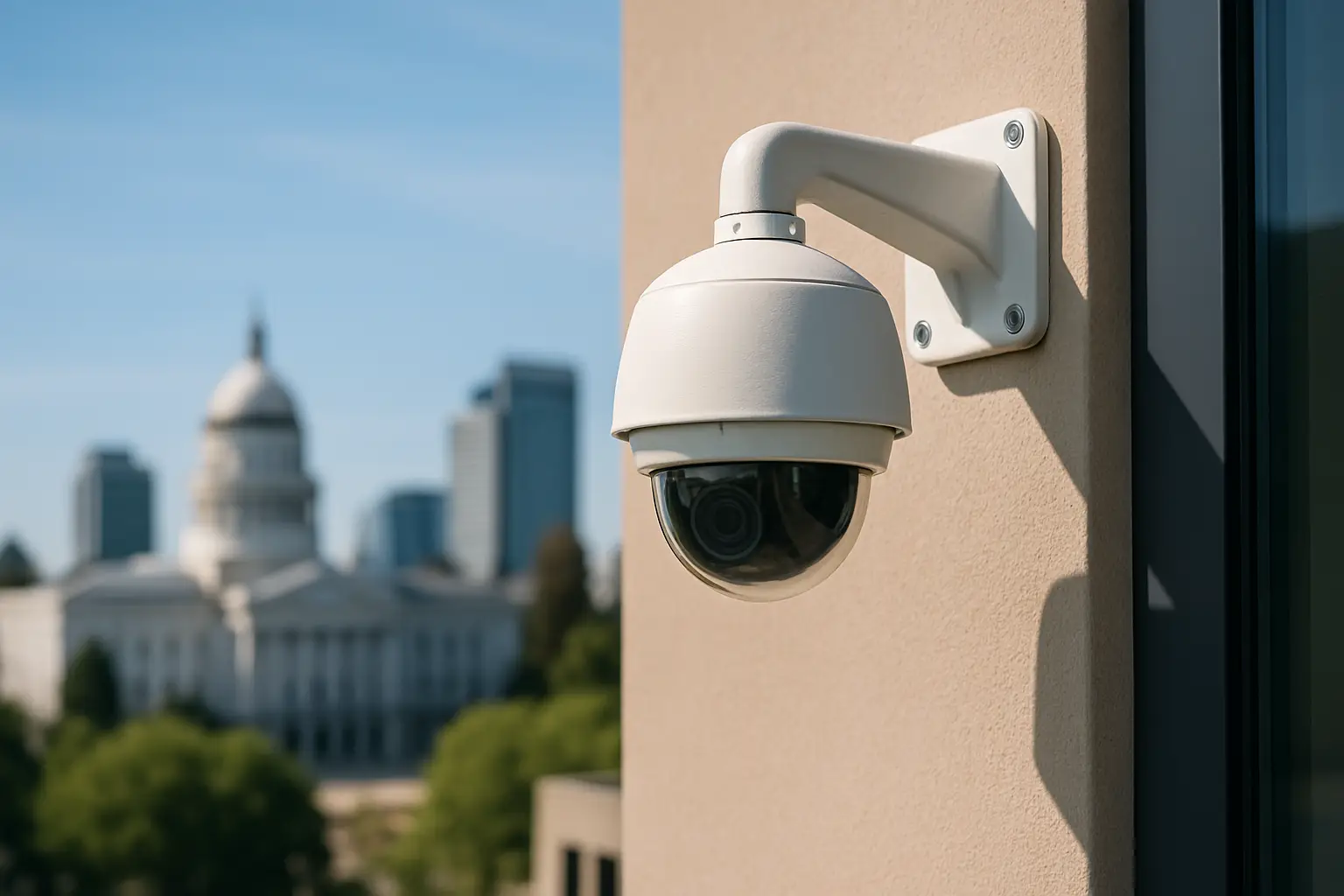
If you have ever gotten two quotes for a security camera system in Sacramento and wondered why they are nowhere near each other, you are not alone. One bid might sound like a steal, another might feel inflated, and neither may spell out what you are actually getting. Pricing is not random, but it is highly dependent on property layout, install complexity, and how you plan to use the footage.
This guide breaks down security camera installation Sacramento pricing in plain terms, with realistic ranges and the specific factors that move a quote up or down. The goal is simple: help you budget confidently and avoid paying for the wrong things.
Security camera installation Sacramento pricing: real-world ranges
Sacramento installs typically fall into a few common buckets. These are not “one-size-fits-all” packages, but they are useful benchmarks when you are trying to decide what a reasonable quote looks like.
For many homes, a professionally installed 4-camera system with an NVR (network video recorder) and remote viewing often lands in the $1,800 to $3,800 range, depending on cable runs, camera type, and how much attic or crawlspace work is needed.
A 6 to 8-camera home or small business setup is commonly $2,800 to $6,500. This is where details start to matter more: detached garages, long side yards, stucco or brick exteriors, and a desire for clean, hidden wiring can shift the labor meaningfully.
For small to mid-size commercial properties, 8 to 16 cameras often price out around $5,500 to $14,000+, especially when you add longer cable distances, higher mounting heights, after-hours work, or a more complex network environment.
You will see quotes below and above these ranges. Lower quotes are often smaller systems, minimal labor, lower-resolution cameras, limited warranty/support, or a simpler “surface-mount everything” approach. Higher quotes usually reflect 4K cameras, careful cable management, challenging construction materials, lift work, or a design that prioritizes identification-quality coverage over “something is happening” coverage.
What drives the cost in Sacramento (and what does not)
Pricing is mostly shaped by three things: how many viewpoints you need, how hard it is to run cable cleanly, and what level of detail you expect to capture.
Camera count is only the starting point
More cameras increases hardware costs, but it also increases labor in a very practical way. Each additional camera needs a location decision, a cable path, a termination, labeling, testing, and a field-of-view check. If you want cameras placed thoughtfully so you can identify faces or license plates instead of just recording motion, time goes up - and quality improves.
A common mistake is pricing by camera count alone. Two 8-camera jobs can be priced very differently if one is a single-story home with an accessible attic and the other is a two-story building with finished ceilings and no easy routes.
Wiring complexity is where quotes diverge
In Sacramento, construction styles vary a lot: older homes with tight crawlspaces, newer builds with easier attic access, small retail suites with drop ceilings, and commercial sites with long exterior runs. The more obstacles the installer must navigate to keep wiring protected and hidden, the more time the job requires.
Exterior wall material matters as well. Running clean conduit on masonry or textured stucco takes more effort than on wood siding, and some customers prefer all cabling concealed, which may require additional access points and careful patching.
Resolution and lens choice affect outcomes, not just price
“4K” is often discussed like a luxury, but it is more accurate to treat resolution as a tool. If you want usable identification at a doorway, cashier counter, or driveway, higher detail helps. But it is not a magic fix. A poorly aimed 4K camera can still be disappointing, while a correctly positioned 1080p camera can be exactly right for general coverage.
Lens selection is part of pricing because it affects the number of cameras required. A wider lens may cover more area but can reduce identification detail at distance. A narrower lens can capture better detail but may require additional cameras to cover blind spots.
NVR capacity and recording time are real costs
Recording is not “free.” The longer you want to keep footage, the more storage you need. Many customers want 14 to 30 days of retention, but the right number depends on your use case. A busy storefront with constant motion records more data than a quiet side yard.
Storage costs rise with camera count, resolution, frame rate, and whether you record continuously or on motion. Your quote should specify the estimated retention window under typical conditions.
Remote access is often straightforward, but network work is not
Most modern NVR systems support remote viewing, but not every property network is ready for it. In homes, this can be as simple as confirming Wi-Fi coverage and router access. In businesses, it can involve VLANs, firewall rules, static IP considerations, or coordination with an IT provider.
If an installer needs to troubleshoot an unreliable network, add a switch, re-terminate existing wiring, or extend internet to an NVR location, pricing can change. The camera system is only as reliable as the infrastructure it sits on.
Typical line items you should expect in a quote
A clear quote should spell out what is included and what is not. You do not need every minor detail, but you should be able to understand what you are paying for.
Hardware typically includes cameras, an NVR, hard drives, a PoE switch (if needed), and mounting materials. Labor includes camera placement, cable routing, terminations, testing, and basic user setup.
If you see vague language like “install cameras” without notes on cable path, weatherproofing, or how the NVR will be secured and ventilated, ask follow-up questions. A low price can become expensive if it leads to exposed wiring, unreliable connections, or cameras aimed at the wrong targets.
Residential vs commercial: why businesses often cost more
Businesses usually need broader coverage and more accountability. You may want coverage of entrances, parking areas, loading zones, sales floors, and cash handling spots. You may also need higher mounting heights to reduce tampering, which can require ladders, lift work, or after-hours installation.
Commercial environments also tend to have more network complexity and stricter expectations for uptime. If a business relies on the system for incident documentation, support and service responsiveness matter. That is part of total cost, even if it is not always called out as a line item.
Add-ons that can raise price (and when they are worth it)
Not every upgrade is necessary, but some are absolutely worth budgeting for if they match your risk areas.
Audio recording is useful in certain contexts, but it can raise privacy and compliance questions, especially in workplaces. License plate capture can be valuable for driveways or lot entrances, but it often requires a dedicated camera, careful angle control, and the right lighting conditions. Smart alerts and analytics can reduce nuisance notifications, but they need correct setup and realistic expectations.
Lighting is another overlooked factor. If an area is dark, the cost-effective fix might be adding proper lighting rather than trying to force a camera to “see” in conditions it was not designed for.
How to keep pricing fair without cutting corners
The best savings usually come from smart design, not cheaper hardware.
Start by defining the purpose of each camera. “Watch the backyard” is different from “identify someone at the back gate.” If you can name the purpose, a good installer can select the right lens and location, and sometimes reduce camera count by improving placement.
Be honest about the property constraints. If you want no visible wiring, say it upfront. If you are okay with small sections of exterior conduit in non-visible areas, you may reduce labor while still keeping the install protected and professional.
Also ask about expandability. It can be cheaper long-term to install an NVR with extra channels now, even if you only start with a few cameras.
Questions to ask before you choose a quote
A price is only meaningful if you know what it buys. Before you sign, you should be able to get clear answers on the expected recording retention, camera model/resolution, where the NVR will live, and how the installer will handle cable protection outdoors.
You should also ask what happens after installation. Will the installer help you set up remote access on multiple phones? Will they show you how to export footage correctly? If a camera stops working, what is the response process? Ongoing support is part of real value because a system you cannot operate confidently is not doing its job.
A pricing approach that prioritizes clean installs and usability
At StaySafe365, pricing is typically built around your layout and coverage goals first, then matched with the right 4K cameras, a reliable NVR setup, and remote access that you can actually use day to day. That means the quote is tied to what you are trying to protect and how the property is constructed, not a generic bundle that leaves blind spots.
Helpful closing thought
If you focus on one thing while comparing quotes, make it this: the best price is the one that delivers clear footage of the moments you will care about, from angles that make sense, with an install clean enough that you forget it is there until you need it.