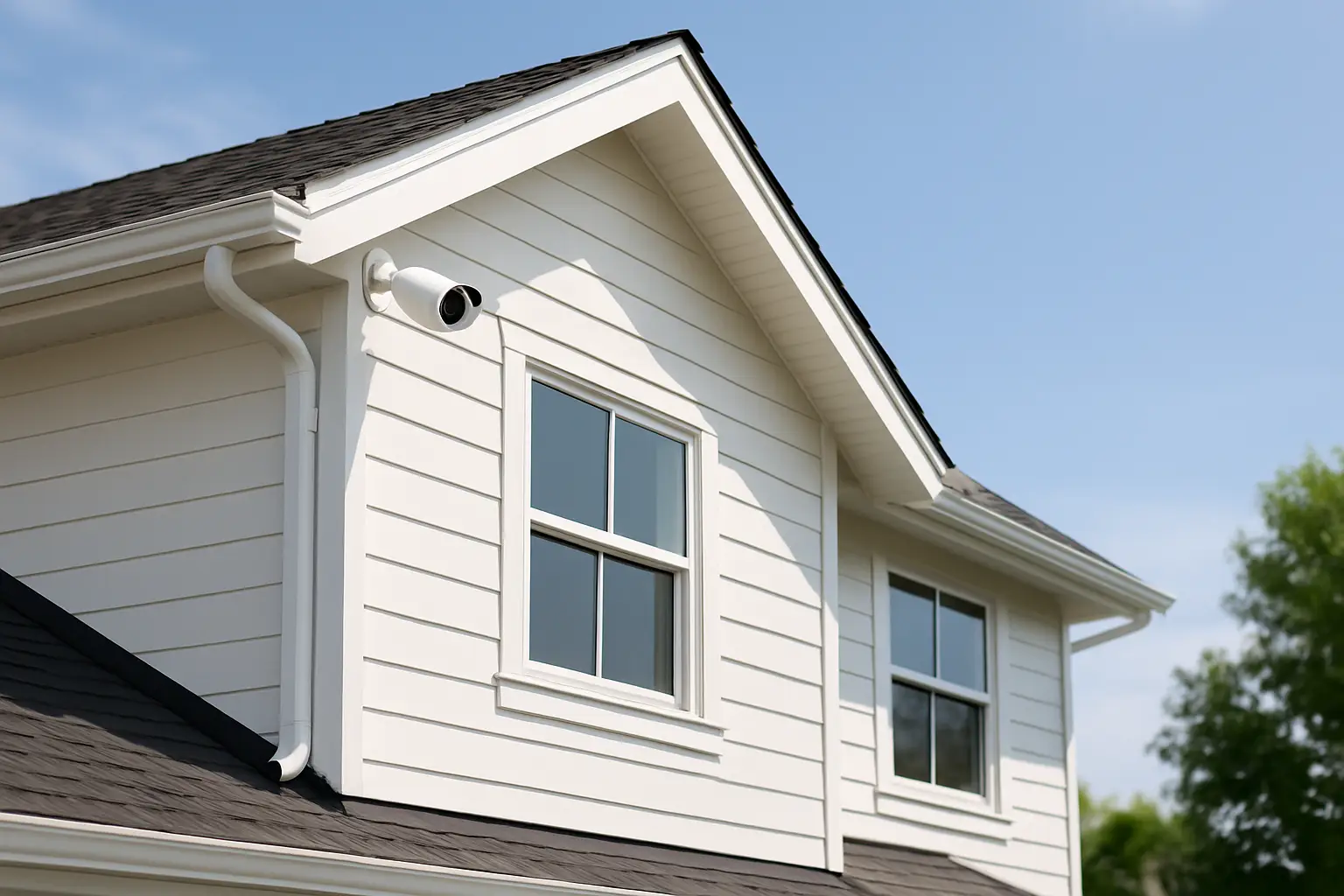
The hardest part of installing security cameras on a two-story property is not the camera itself. It’s getting power and data to the right spots without ugly exterior conduit, unreliable Wi-Fi links, or cables exposed to weather and tampering. That’s exactly why PoE cameras are such a strong fit for two-story homes and small commercial buildings - one cable for power and video, consistent performance, and fewer points of failure.
If you’re considering PoE camera installation for two story buildings, the goal is simple: full coverage at the right angles, stable recording to an NVR, and a clean install that doesn’t create new problems like water intrusion, dead zones, or network headaches.
Why two-story PoE camera installs go wrong
Two-story installs add constraints you don’t run into on a single-level ranch house. Camera height can work for or against you. Eaves are higher, attic access varies, and the path from your network location to the exterior is longer.
Most “quick installs” fail in predictable ways. The first is poor planning: cameras are placed where they’re easy to mount instead of where they can actually identify faces or capture plates. The second is cable routing: holes get drilled in the wrong places, penetrations aren’t sealed correctly, or long exterior runs get sun-baked and brittle. The third is system design: the PoE switch is undersized, the NVR is tucked in an accessible closet, or remote viewing is set up in a way that creates security risks.
You can avoid all of that with a little upfront design, and by treating cable routing like the main event, not an afterthought.
Planning coverage on a two-story property
Before you pick camera locations, walk the property like you’re trying to break in. Where would someone approach? Where can they linger unseen? Which areas need identification versus general awareness?
A common mistake is mounting everything too high. Yes, higher is harder to reach, but if the camera is looking down at a steep angle from the second story, you often get the top of a hat instead of a face. For most homes, a first-floor eave height is a sweet spot for identification at doors and along the front approach. Second-story cameras can be great for broad overviews of a backyard, side yard, or parking area, but they’re not always the best choice for “who is that?” footage.
Aim for overlap. When one camera covers a walkway, another should catch the same person from a different angle. Overlap matters most at entry points, driveways, and gates.
The four zones most two-story properties need
You can usually design a reliable layout by thinking in zones.
Front door and porch need an angle that captures faces as people approach, not just the top of the head under a porch light. Driveway and street-facing areas are about capturing vehicles and activity near cars. Side yards are common blind spots and are often where gates, trash bins, or utility shutoffs live. Backyards and rear doors matter for privacy and safety - you want visibility without pointing into neighbors’ windows.
For small businesses in two-story buildings, the same logic applies: entrances, loading or dumpster areas, parking, and side access.
Picking the right camera types for a two-story setup
PoE gives you flexibility because you’re not chasing outlets. That said, the camera style should match the scene.
Turret cameras are often a great choice under eaves because they resist glare and are easier to aim precisely. Bullets can work well for longer views down a side yard or driveway, but they can be more noticeable and can create reflections if mounted too close to soffits or gutters. A dedicated doorbell camera can be helpful, but it shouldn’t be your only face-capture angle.
Resolution is another trade-off. 4K cameras can deliver excellent detail, but only when the field of view and distance make sense. A wide 4K shot from too far away can still leave faces small. Sometimes a slightly narrower lens at a key location beats “more megapixels” everywhere.
Cable routing on two stories: the cleanest paths
A clean PoE install is mostly about where the cable travels. On a two-story property, you’re usually deciding between attic routes, wall drops, and selective exterior runs.
If the home has accessible attic space, you can often route from a central NVR or network area up into the attic, then out to eave locations. The challenge is getting from the first floor to the attic without opening large sections of drywall. A strategic interior wall chase, a closet corner, or a utility pathway can sometimes make that possible.
For second-story cameras, attic routing is often straightforward if you can reach the eaves. For first-story camera locations, you may need a wall drop from the attic into the first-floor ceiling area, then out to the soffit. This is where experience matters: one wrong hole can mean patchwork and repainting.
Exterior runs should be a last resort, but sometimes they’re the best option for a specific corner that’s otherwise inaccessible. If you must run cable outdoors, use outdoor-rated Ethernet, protect it from direct sun exposure when possible, secure it neatly, and seal every penetration correctly.
The detail that prevents water damage
Every cable penetration should be treated like a small roof leak waiting to happen. Drill placement, grommets, drip loops, and high-quality exterior sealant matter. So does avoiding low points where water can pool. This isn’t about being picky - it’s about preventing rot, staining, and pest entry.
PoE switch and NVR sizing for a two-story system
PoE is simple in concept: one Ethernet cable powers the camera and carries the video back. But the equipment behind it needs to be matched to the plan.
Your PoE switch (or the built-in PoE ports on some NVRs) must provide enough power budget for all cameras, including night vision draw. It also needs enough ports for future expansion. If you’re installing six cameras today but know you’ll want eight later, size for eight now. It’s cheaper and cleaner than reworking the network later.
On the recording side, storage is where “it depends” comes in. Higher resolution, more cameras, and 24/7 recording all increase storage needs. Many homeowners want at least two to four weeks of retention. Businesses often want longer depending on policies or incidents. Motion-based recording can extend retention, but it’s only as good as the motion setup - and windy trees on a two-story lot can trigger constant events if the camera is aimed too wide.
Mounting height and aiming: what actually works
For doors, aim to capture a face at a natural approach distance. If you mount at the second story, the angle often becomes too steep, especially on a porch. If you mount too low, you invite tampering. The best compromise is usually under a first-floor eave, aimed slightly down and across the approach path.
For driveways, you want enough angle to see the driver side as vehicles pull in or out. A camera pointed straight down the driveway can be helpful, but if it’s too high and too wide, it won’t give you identifying detail. With two stories, you can use elevation to your advantage, but aim carefully to avoid glare from headlights and to keep the horizon out of the shot when possible.
For side yards, long narrow views are common. Place the camera so it looks along the fence line, not across it. That gives you more time on target as someone moves through the area.
Networking and remote access without creating new risks
Remote viewing is one of the biggest reasons people choose modern PoE systems. It’s also an area where shortcuts can create security issues.
Use strong, unique passwords and keep firmware updated. If the system allows it, isolate cameras on a dedicated network segment and limit who has admin access. Avoid settings that expose devices broadly to the internet. A properly configured NVR with secure remote access gives you the convenience you want without turning your camera system into an easy target.
Common two-story mistakes we see (and how to avoid them)
Two-story properties make it tempting to mount cameras “up high and out of the way.” The trade-off is detail. If identification is the goal, you need a reasonable angle and the right distance.
Another common issue is installing cameras under bright soffit lights that cause glare at night. A small shift in placement or changing the light type can dramatically improve night footage.
Cable slack and terminations matter too. Poor crimps, unprotected junctions, or cable ends left exposed under eaves can lead to intermittent problems months later. A reliable system feels boring because it just works, even in heat, rain, and wind.
When to DIY vs when to bring in a pro
If you have a one- or two-camera setup, easy attic access, and you’re comfortable drilling, fishing cable, and terminating Ethernet cleanly, DIY can be reasonable.
For most two-story installs, the difficulty jumps when you need multiple wall drops, clean exterior penetrations, and precise aiming at height. Ladder safety alone is a real consideration. The other big factor is design: choosing camera locations that produce usable evidence, not just “some video.” If your goal is reliable coverage with clean routing and a system you’re confident using, professional installation often pays for itself in time saved and problems avoided.
In the Sacramento area, StaySafe365 typically designs PoE systems around the specific layout of the home or building, then installs with clean cable routing, NVR recording, and remote access that clients can actually use day to day. The difference isn’t just hardware - it’s making sure the system fits the property.
A better way to think about your two-story camera plan
Instead of asking, “How many cameras do I need?” ask, “Where do I need identification, and where do I just need visibility?” Two-story homes and buildings can give you great vantage points, but only if the camera angles and cable paths are chosen intentionally.
If you take the time to plan coverage zones, keep cable routes protected, and size the PoE and recording equipment for real-world use, you end up with a system that feels simple. Not because it’s basic, but because it’s built correctly. And when you need footage, simple is exactly what you want.